
FirstLook Team
· 10 min read
Getting a player to install your game is hard. Getting them to come back tomorrow, next week, and next season is harder, and it is where most studios quietly lose the audience they worked so hard to win. A great launch spike feels like success, but if those players drift away within a fortnight, you are refilling a leaky bucket with every marketing pound you spend.
That is the problem live ops is built to solve. In this guide we will cover what live ops actually means, why retention beats acquisition on almost every measure that matters, the metrics worth tracking, and a step-by-step approach to keeping players engaged over the long run. We will also dig into win-back campaigns, because the players who already loved your game are often the easiest to bring home.
What Is Live Ops?#
Live ops, short for live operations, is the ongoing practice of running, updating, and growing a game after it has launched. Instead of treating release day as the finish line, live ops treats it as the starting line. The game becomes a living service that you nurture with new content, events, communications, rewards, and community activity.
If you have ever returned to a game for a seasonal event, a limited-time mode, a new battle pass, or simply a friendly nudge that there was something fresh to do, you have been on the receiving end of live ops. Done well, it feels less like marketing and more like an invitation. The studio is telling you there is a reason to come back, and making it easy and rewarding to do so.
Live ops is not only for free-to-play giants with huge teams. Indie studios, premium titles, and early access games all benefit from a deliberate engagement rhythm. The scale changes, but the principle does not. Players stay where they feel seen, where progress feels meaningful, and where there is always a little more to discover.
Why Player Retention Matters More Than Acquisition#
Acquisition gets the headlines, but retention pays the bills. Here is the simple logic behind that.
A player you retain costs you almost nothing to reach again. You already have their attention, their account, and a relationship to build on. A new player, by contrast, has to be found, persuaded, and onboarded, usually at real cost through ads, creator deals, or store features. When retention is weak, every acquisition pound has to work twice as hard, because you are constantly replacing the players who leave rather than building on the ones who stay.
Retention also compounds. Engaged players play more, spend more, and talk more. They leave reviews, invite friends, post clips, and turn up in your community channels. A healthy retained base becomes a growth engine in its own right, lowering your reliance on paid acquisition over time. A churning base does the opposite, quietly eroding word of mouth and leaving a trail of lukewarm reviews that make the next launch harder.
There is a reputational angle too. A game that holds its players signals quality to storefronts, algorithms, creators, and the press. Retention is the metric the wider ecosystem reads as proof that a game is worth paying attention to.
The Retention Curve: Metrics Every Live Ops Team Should Track#
You cannot improve what you do not measure, so before we get to tactics, it helps to know which numbers tell the truth about engagement.
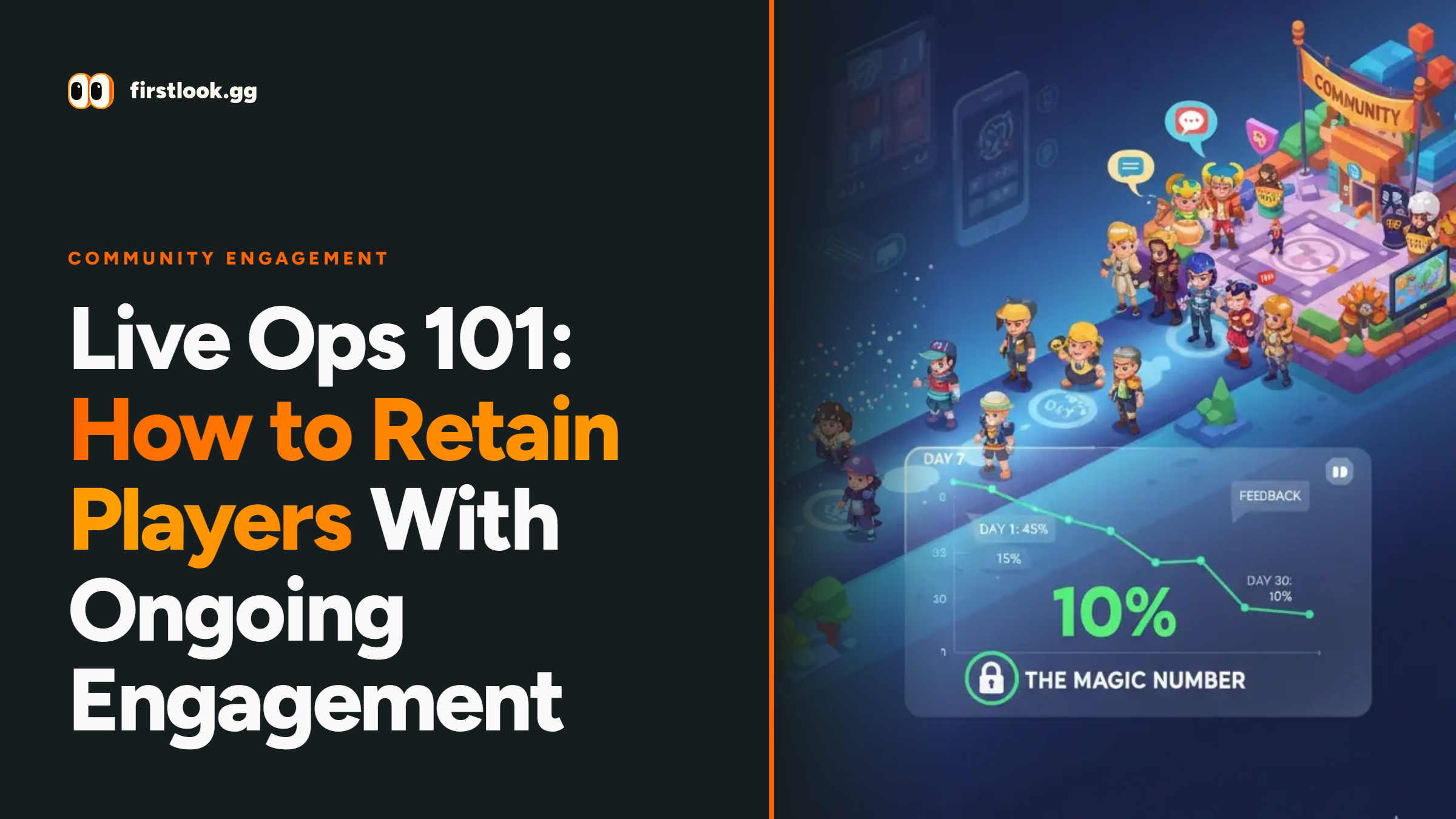
Day 1, Day 7, and Day 30 retention. What percentage of players return one day, one week, and one month after first playing. These three points sketch out your retention curve and show you exactly where players are slipping away.
Churn rate. The percentage of active players who go quiet over a given period. Watching churn by cohort, by country, or by acquisition source often reveals patterns you can act on.
Session frequency and length. How often players come back and how long they stay. Rising frequency is one of the clearest signs that your engagement loop is working.
Playtime trends. Total playtime, and crucially recent playtime, such as hours logged in the last two weeks. A drop in recent playtime is an early warning that a player is cooling off.
Engagement signals beyond the game. Community activity, survey responses, announcement open rates, and reward participation all show whether players are emotionally invested, not just logged in.
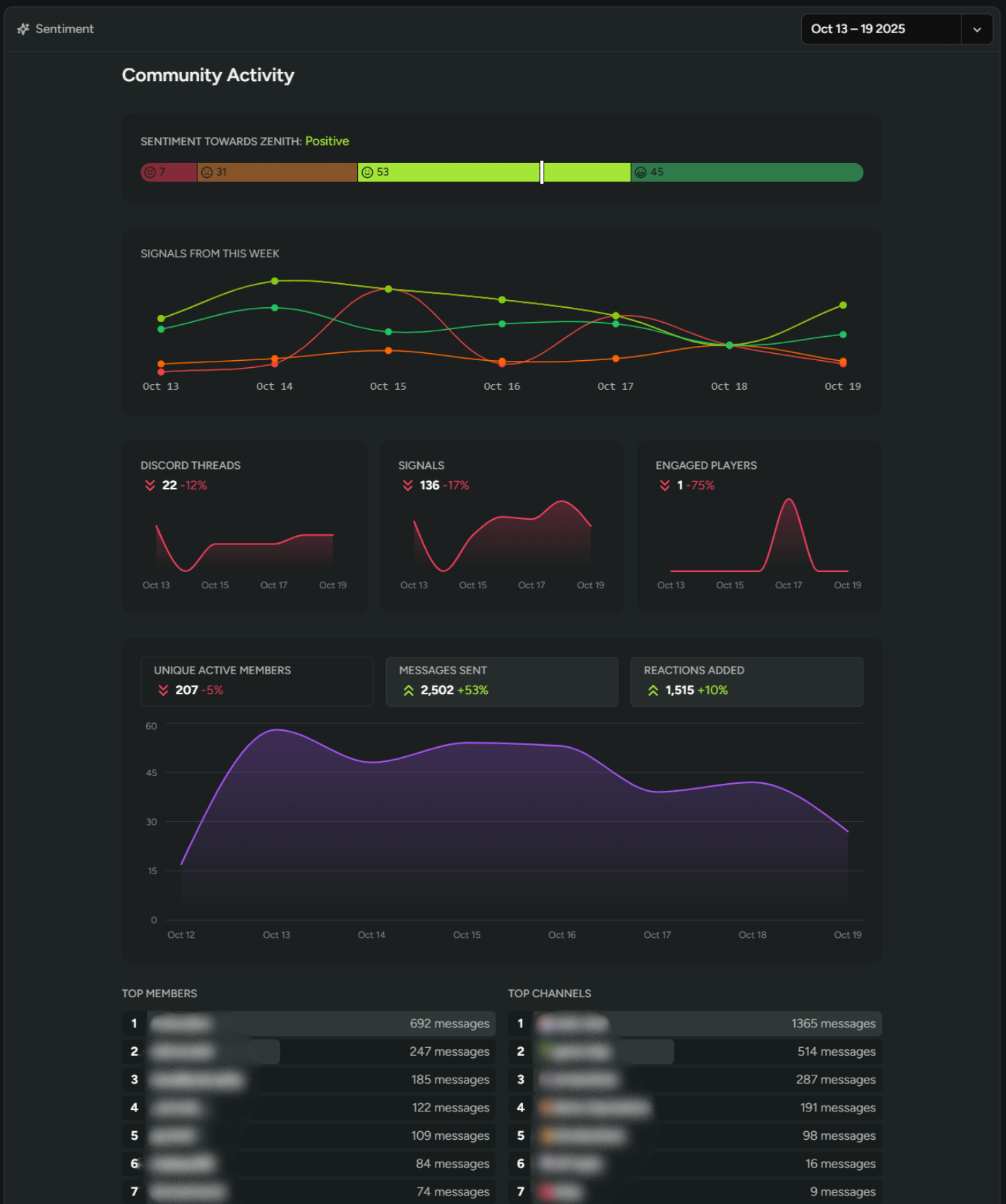
The goal is not to drown in dashboards. It is to find the one or two moments on your retention curve where the most players leave, and concentrate your live ops effort there.
How to Retain Players With Ongoing Engagement#
Retention is not a single feature you switch on. It is a rhythm you build. Here is a practical sequence that works for studios of almost any size.
1. Build a content cadence players can rely on#
Players stay when they trust that something new is always around the corner. That does not mean shipping a giant update every week. It means establishing a predictable rhythm, whether that is a monthly content drop, a seasonal event calendar, or a weekly community moment. Consistency matters more than scale. A reliable cadence trains players to keep your game in their rotation, because they know the next reason to log in is coming.
2. Reward the actions that matter with quests and progression#
Progression is the backbone of engagement. Daily and weekly quests, milestones, seasonal passes, and structured challenges give players short-term goals that ladder up to long-term investment. The trick is to reward the behaviours you actually care about, not just raw playtime. If you want players introducing themselves in your community, submitting feedback, joining events, or completing play sessions, design quests around those specific actions and attach meaningful rewards to them. Over time, the points a player accrues become a clean signal of who your most committed players are.
3. Segment your players and personalise the message#
Treating every player the same is the fastest way to lose them. A brand new sign-up, a loyal veteran, and a player who has not logged in for three weeks all need a different message. Use a player CRM to build segments based on playtime, sentiment, sign-up source, and engagement, then tailor your communications to each group. A targeted announcement that lands with the right cohort at the right moment will always outperform a blast to your entire list. Personalisation is not a nice-to-have in live ops, it is the difference between a message that re-engages and one that gets ignored.
4. Listen to sentiment and act before players churn#
Churn rarely happens out of nowhere. It usually follows a patch that frustrated people, a feature that missed the mark, or a quiet build-up of complaints in your Discord and store reviews. By tracking sentiment across Steam reviews, community channels, and surveys, you can spot frustration while there is still time to respond. Replying to a worried player, fixing a sore spot, and showing the community you are listening can convert a would-be quitter into a loyal advocate. Sentiment is your early-warning system, and acting on it is one of the highest-leverage things a live ops team can do.
5. Turn your community into a growth loop#
Your most engaged players are also your best marketers. Referral programmes, friend invites, and creator-driven content turn retention into acquisition. When a happy player brings in a friend, that friend arrives with built-in trust and tends to retain better than a cold install. Building these loops into your live ops, and rewarding the players who power them, means your engaged community keeps feeding itself rather than slowly draining.
Win-Back Campaigns: How to Re-Engage Lapsed Players#
No matter how good your engagement is, some players will drift away. That is normal. The good news is that lapsed players are often far easier to win back than new players are to find, because they already know and once enjoyed your game. A focused win-back campaign can recover a meaningful slice of your audience for a fraction of the cost of fresh acquisition.
Identify who churned and why#
Start by defining what lapsed actually means for your game. Is it no session in 14 days, 30 days, or longer? Once you have a definition, segment those players and look for the why. Did they leave after a specific update, at a particular progression wall, or simply when there was nothing new to do? The reason shapes the message. Someone who hit a frustrating difficulty spike needs a different nudge than someone who ran out of content.
Pick the right win-back hook#
A win-back message needs a genuine reason to return, not just a plea. Strong hooks include a major new update or feature, a seasonal event, a balance change that fixes the exact thing they disliked, a returning-player reward, or a limited-time reason to log back in. Lead with what has changed since they left. The subtext you want them to feel is simple. The game they remember has grown, and there is something waiting for them.
Time it and target it#
Timing turns a good message into a recovered player. Trigger win-back communications around your biggest content moments, when there is real news to share, and route them through the channels each player actually uses, whether that is email, Discord, or in-game. Automated messaging based on player behaviour lets you reach the right person at the right moment without manually chasing every cohort. A lapsed player who hears from you the day a long-awaited feature ships is far more likely to return than one who gets a generic reminder weeks later.
Measure win-back success#
Treat win-back like any other campaign. Track how many lapsed players returned, how long they stayed this time, and whether they re-engaged with your community or simply bounced again. Run A/B tests on your hooks and timing so each campaign teaches you something for the next one. Recovered players who churn again quickly are telling you the underlying engagement loop still needs work, which loops you neatly back to the strategies above.
Bringing It Together With FirstLook#
Everything we have covered, the content cadence, the quests and rewards, the segmentation, the sentiment tracking, the win-back triggers, depends on one thing. You need to actually know your players and be able to reach them. That is exactly what FirstLook is built for.
FirstLook is a player relationship platform that supports your game across its whole lifecycle, from first invite to live ops. Its engagement tools let you design quests and reward structured actions so you can see who your most committed players really are, segment your audience in a full player CRM using playtime, sentiment, tags, and custom attributes, and send targeted announcements to exactly the right cohort. You can track sentiment across Steam reviews and community channels to catch frustration before it becomes churn, measure retention and engagement trends, run A/B tests, and trigger automated messaging based on player behaviour. The growth loops matter too, with referral and creator programmes that turn your retained players into your acquisition engine. Studios from indies to publishers like Krafton, ArenaNet, and Remedy use it to keep their communities engaged, all in one place rather than across a tangle of disconnected tools.
Live ops stops being guesswork when your player data, your communications, and your engagement mechanics live in the same platform.
Final Thoughts#
Live ops is not a single launch tactic, it is the long game. Retain players with a reliable content rhythm, reward the actions that matter, personalise how you talk to different segments, listen to sentiment before it turns into churn, and build community loops that grow themselves. When players do drift away, win them back with a real reason to return, the right timing, and a measured approach that teaches you something each time.
Acquisition fills the top of the funnel. Engagement is what keeps it from leaking out the bottom. Get your live ops rhythm right, and every player you bring in has a reason to stay, to spend, and to bring their friends along too.
FAQ#
What is the difference between live ops and game updates?#
Game updates are individual releases of content or fixes. Live ops is the ongoing strategy that plans, schedules, and surrounds those updates with events, communications, rewards, and community activity to keep players engaged over time.
How soon should a studio start thinking about retention?#
Before launch. The earliest playtests, beta cohorts, and community members are your first retention data. Building the habits and tooling early means you are not scrambling to understand churn after it has already started.
What is a good Day 30 retention rate?#
It varies enormously by genre and business model, so the most useful benchmark is your own trend over time. Focus on identifying where your retention curve drops most sharply and improving that specific moment, rather than chasing a universal number.
Are win-back campaigns worth it for smaller games?#
Yes. Lapsed players already know your game, so re-engaging them is usually cheaper and more effective than acquiring new players. Even a modest recovery rate can meaningfully lift an indie title’s active base.