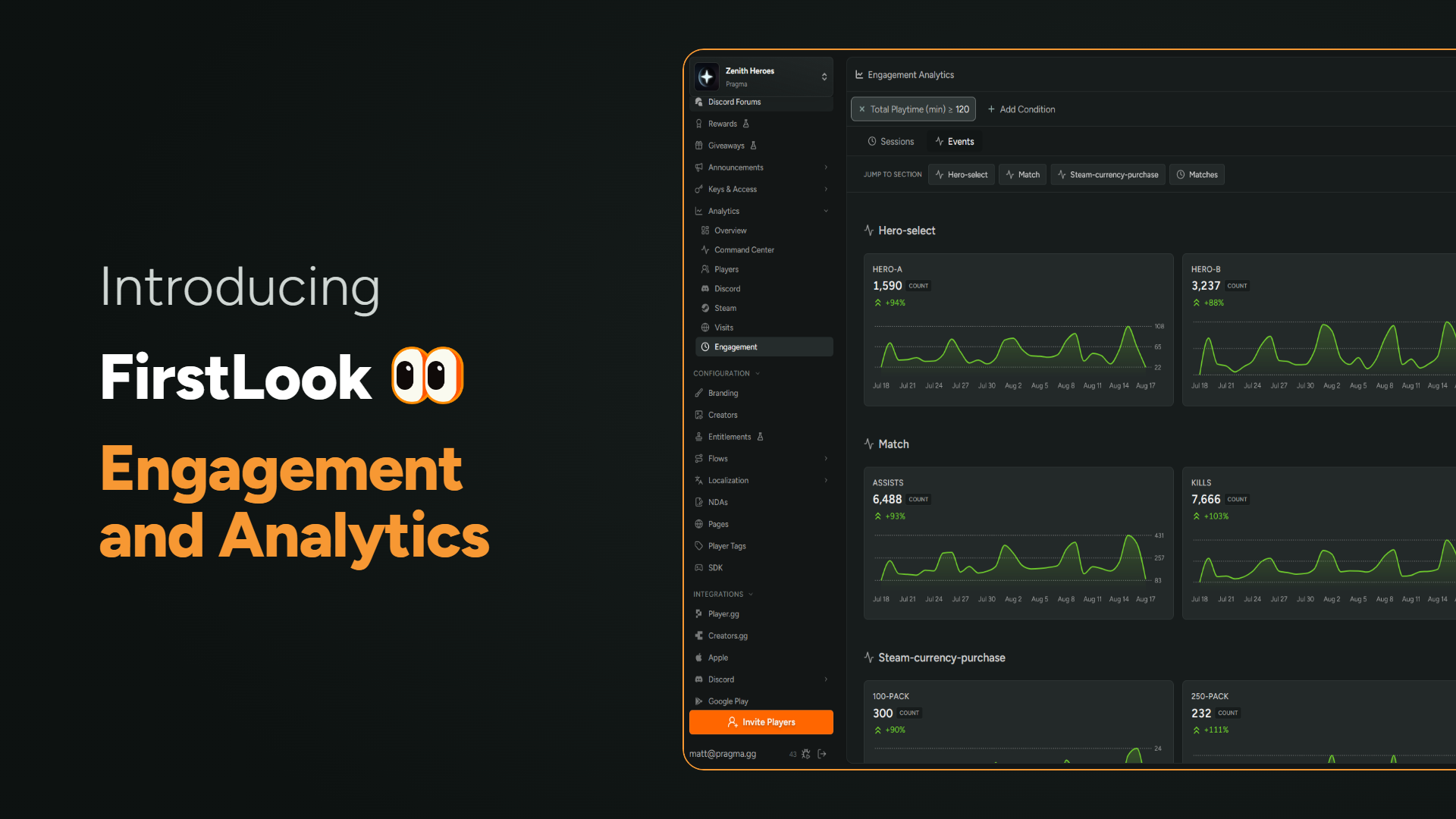

FirstLook Team
· 5 min read
Studios have never been short on player data. They have been short on a way to act on it while it still matters.
Today that changes. FirstLook is launching Analytics + Engagement, and it does something the stack of tools studios stitch together has never quite managed. It puts every player’s in-game and out-of-game data on a single record, so you can analyze, segment, and message your players inside the game and out, all against the same player.
One player record, inside and outside the game#
The tooling most studios use to understand their players is fragmented by default. Session and retention data lives in one tool. Survey responses sit in another. Playtester names and Discord activity are in a third. You end up with a pile of dashboards that never quite talk to each other, and a player who exists as five disconnected rows in five different systems.
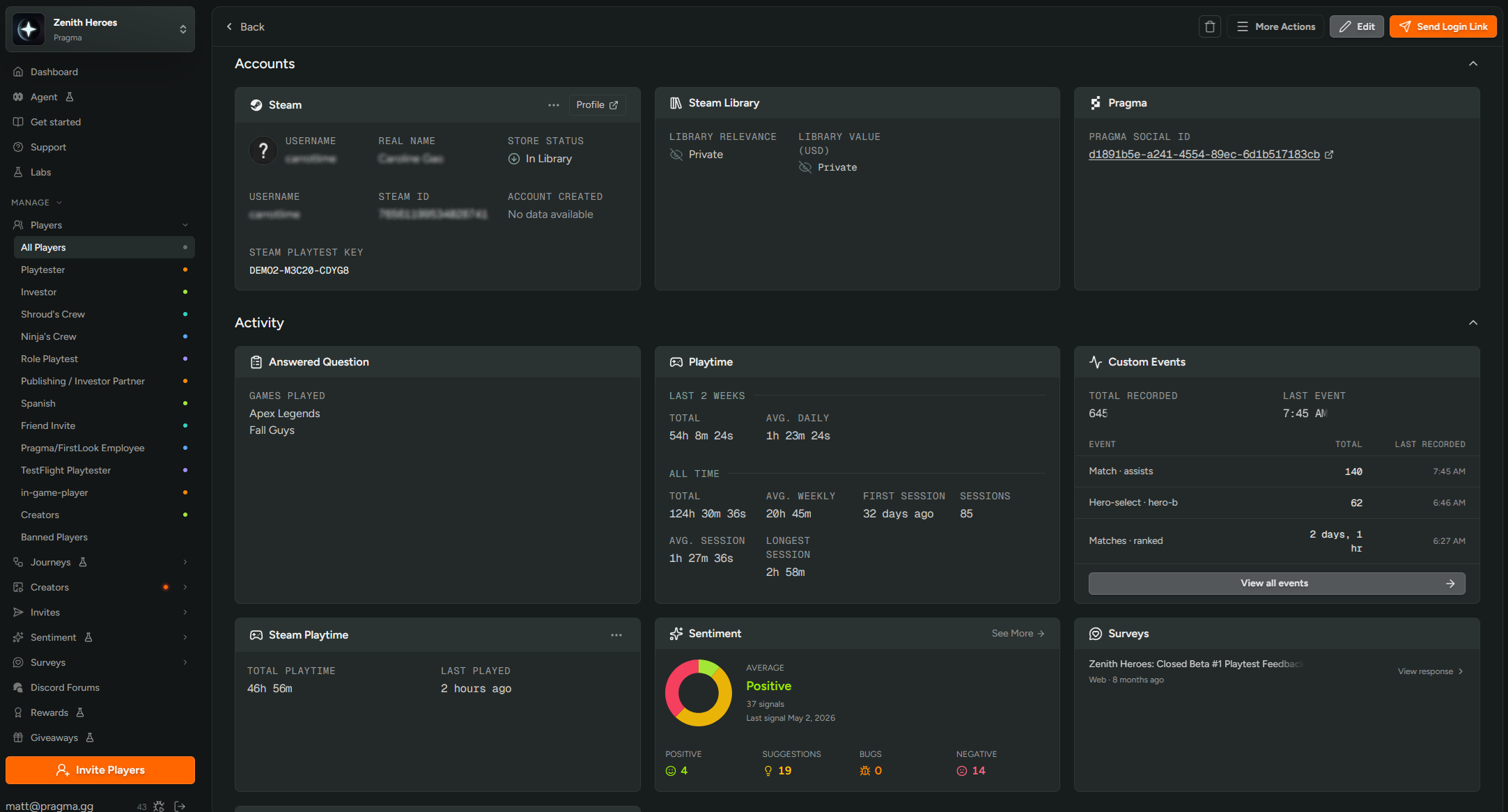
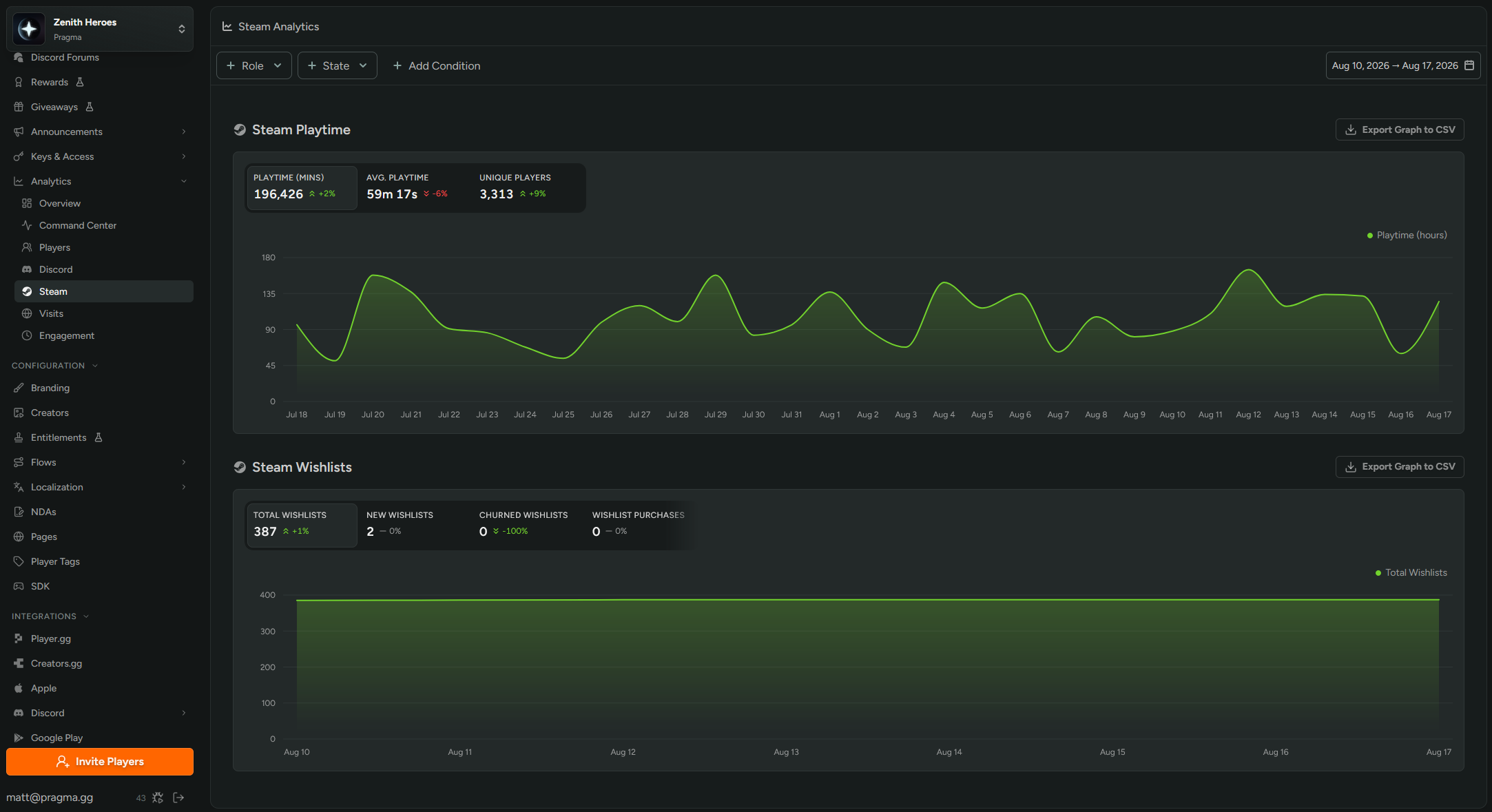
Analytics + Engagement collapses that split. Every session, retention cohort, playtime figure, wishlist movement and custom event is attached to the individual player who generated it, right alongside their survey answers, tags and message history. The result is one holistic player record instead of a set of dashboards you have to mentally join yourself. You stop looking at data about players in the abstract and start looking at players.
In practice, that means the tester who gave you sharp feedback in your last playtest, wishlisted the game, then went quiet for three weeks is no longer three anonymous entries in three tools. She is one player with a history you can actually see and respond to. Multiply that across your whole player base and it is the difference between guessing what your players want and knowing.
See it, then act on it while it matters#
Data you cannot act on in time is just a record of what went wrong. That timing gap is the thing this launch is built to close.
“Studios have never been short on player data. They’ve been short on a way to act on it while it still matters,” said Eden Chen, CEO of FirstLook. “A retention drop you find six weeks later is a post-mortem. The same drop, caught on the day, is a conversation with a player who still cares about your game. What we’ve built closes that gap, and we’ve priced it so a ten-person studio gets the same tooling a publisher does.”
That is the shift. A number on a chart becomes a reason to reach out to a real person while they are still reachable.
Built right into your game#
Because the point is acting on data, the messaging lives where your players are. You can survey players, apply tags, build segments and deliver messages directly inside your build through free Unreal and Unity SDKs, with the exact same data model sitting behind both surfaces. What you learn out of game and what you do in game are finally the same system, not two integrations you maintain by hand.
Reaching a player inside the game, at the exact moment something happens, lands in a way an email three days later never will. A survey that appears the moment a player finishes a level actually gets answered. A reward that arrives the instant it is earned actually gets noticed. And because the two surfaces share one record, the player you tagged from a Discord conversation is the same player your in-build message reaches. Meeting players in the moment is where real engagement happens.
Segments that fill themselves, and journeys that run themselves#
Acting on all of this is automated, not manual.
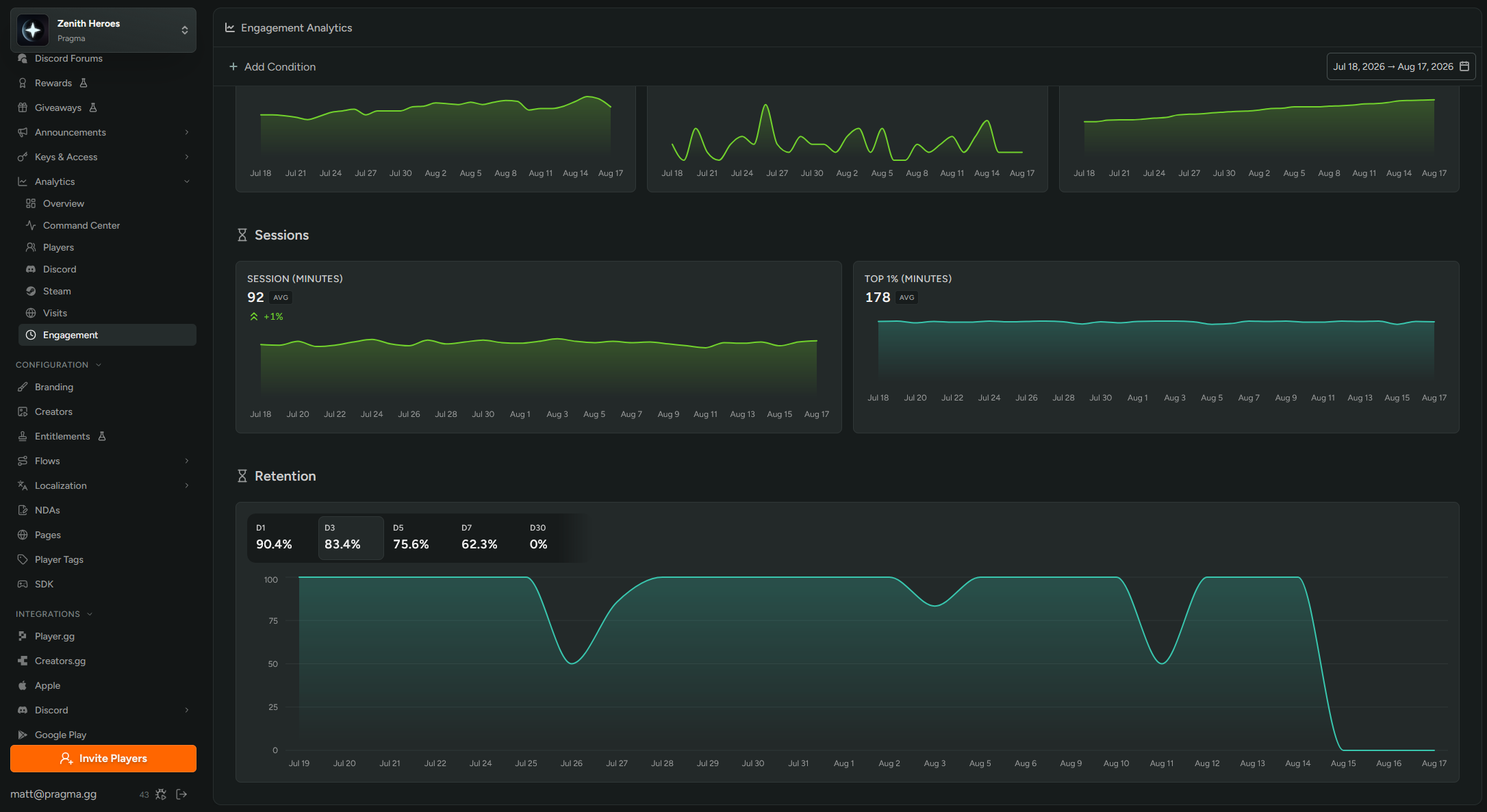
Define a segment once, say players with more than five sessions who returned on day seven and rated the build five stars, and it fills itself as new players qualify. No exporting, no re-running a query every week. Then attach whatever should happen next: an announcement, a reward unlock, or a multi-step journey that waits, branches on whether a player came back, and follows up accordingly.
And if you would rather just describe what you want, ask the FirstLook Agent to build the flow in plain language. You say what you are trying to do, it assembles the segment and the journey for you.
A few plays studios reach for straight away:
- Win back players who dropped off after session two, before they forget the game exists.
- Message everyone who wishlisted the moment your next playtest build goes live.
- Automatically reward the players who came back on day seven, the ones worth keeping close.
- Flag your most engaged testers so your team can pull them into a VIP channel.
Built for games, not retrofitted from consumer apps#
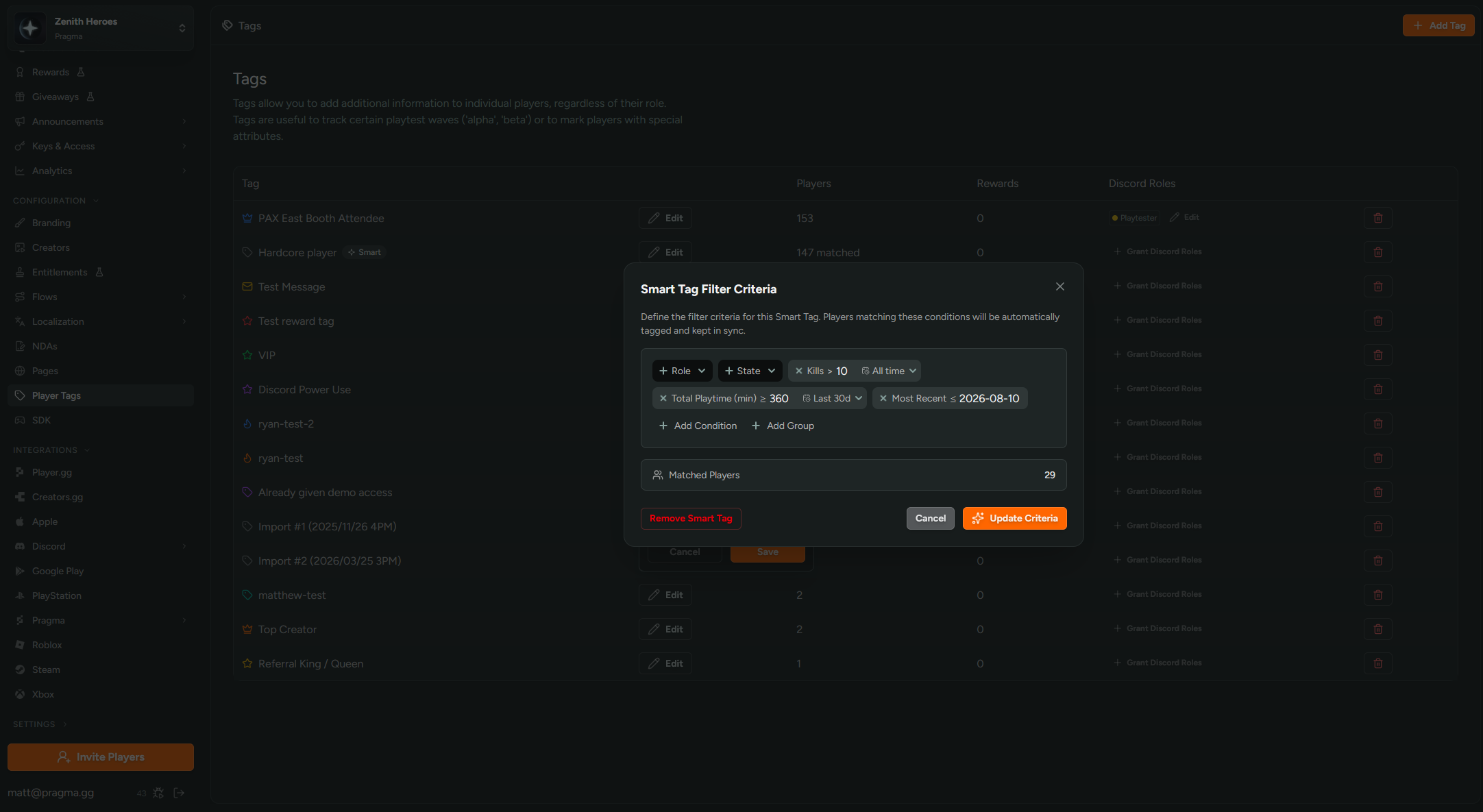
None of this asks you to model your game from scratch. Retention cohorts, playtime, wishlists, playtest waves and survey responses are native concepts in Analytics + Engagement, not custom events you have to define before the tool understands your game.
That is the quiet difference between something built for studios and a general-purpose platform pointed at games. The general-purpose tools expect you to build that whole vocabulary yourself first, before you get a single useful answer. We did that part for you, because we only build for games.
It also means you are productive on day one instead of week three. There is no schema to design, no taxonomy to agree on in a meeting, and no analytics engineer required before the data starts answering questions. You point it at your game and the concepts already fit.
Priced so a ten-person studio gets what a publisher gets#
Engagement platforms built for consumer apps typically start above $10,000 per month, which puts them out of reach for most independent and mid-size studios. That pricing is exactly why so many small teams end up with the fragmented stack in the first place. When the unified option costs more than a small studio’s entire monthly runway, of course teams glue together whatever free tools they can find. We wanted the better path to also be the affordable one.
Analytics + Engagement is priced to end that:
- Free for playtime and retention, up to 100,000 player profiles.
- $99 per month for analytics core.
- $3,000 per month for the full suite.
Same tooling for a ten-person team as for a publisher. That was the point.
Available today#
Analytics + Engagement is live right now for every FirstLook studio, and it is already switched on for existing accounts. There is nothing to migrate and nothing to wait for. Open your workspace and your players are already there, on one record. Whether you are a two-person team running your first playtest or a studio managing hundreds of thousands of players, the same tooling is sitting in your account today. Full documentation lives in the FirstLook docs.
If you have ever found a retention drop weeks too late to do anything about it, this is the fix. See the players behind your numbers, and reach them while it still matters. Explore Analytics + Engagement, or get started free.